
Do You Have Forex Strategy ?
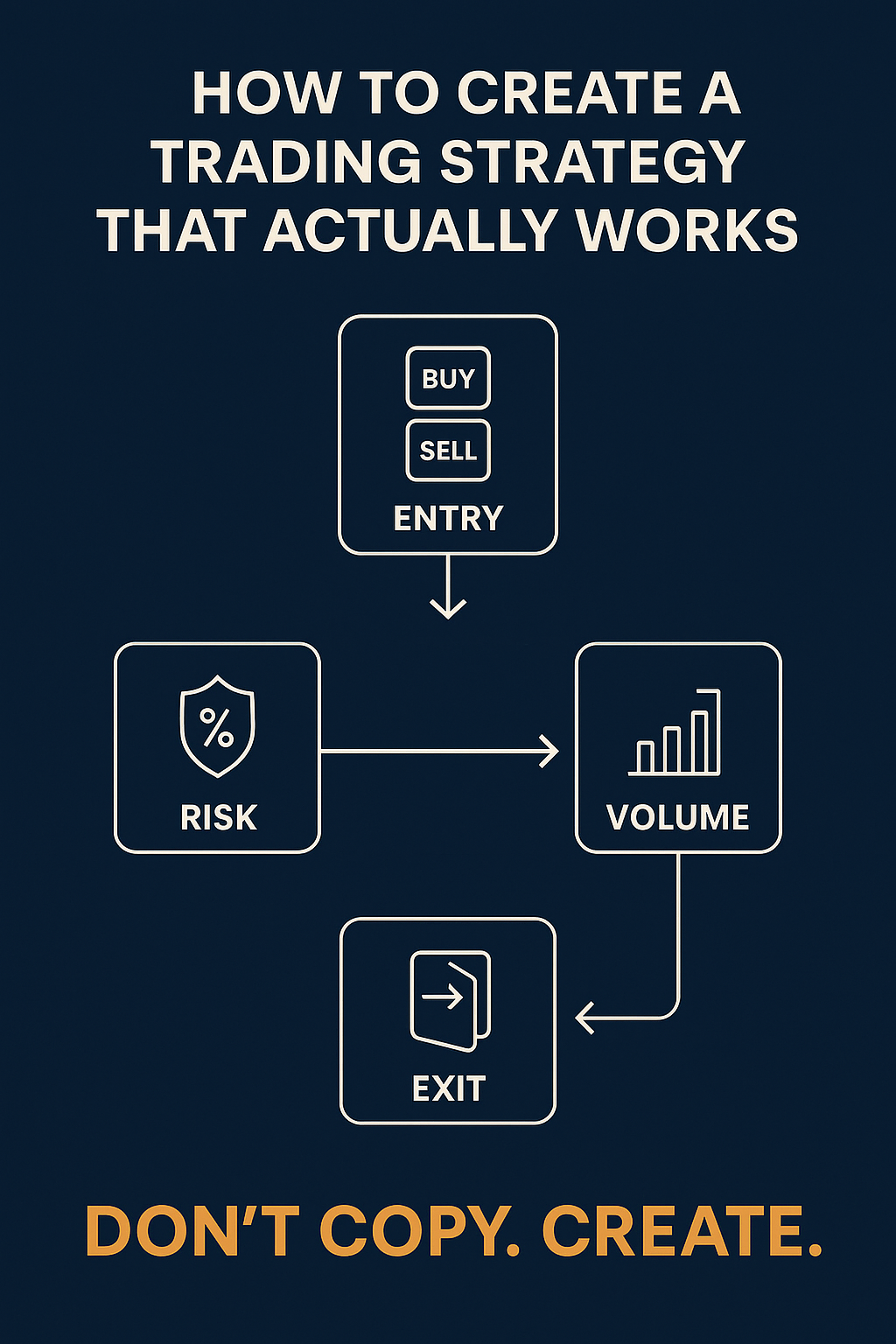
How to Create a Trading Strategy That Actually Works
Don’t Copy. Create.
In the Forex world, copying someone else’s trading strategy might look like a shortcut to success — but it’s often a fast track to failure. The truth? No one else trades with your mindset, risk appetite, or financial goals. That’s why building your own trading strategy isn’t just smart — it’s essential.
Let’s walk through a practical roadmap to help you create a trading strategy that’s custom-built for you and that actually works.
Step 1: Define Your Trading Style
Before anything else, ask yourself:
- Are you a scalper, day trader, or swing trader?
- Do you prefer short bursts of action or holding trades overnight?
- How many hours a day can you realistically trade?
Tip: Your lifestyle should define your trading style — not the other way around.
Step 2: Entry Criteria – When to Get In
Set clear, measurable rules to identify a valid trade setup. These might include:
- Technical indicators (e.g., RSI below 30 = oversold)
- Candlestick patterns (e.g., bullish engulfing on support)
- Price action zones (support/resistance, trendlines)
- Fundamental triggers (economic news, interest rate decisions)
Rule of thumb: No more than 2–3 filters for clean decision-making.
Step 3: Risk Management – Protect Your Capital
Ask any seasoned trader and they’ll tell you: Risk management is more important than trade direction.
Key elements:
- Position Sizing: Risk only 1–2% of your account per trade
- Stop Loss Placement: Always set a stop — don’t rely on gut feeling
- Risk-to-Reward Ratio: Aim for a minimum of 1:2 or 1:3 on each setup
Never move your stop to “hope” for recovery. Stick to your plan.
Step 4: Volume and Lot Size
Adjust your lot size based on your account size and stop loss distance. For example, trading 1 lot with a 10-pip stop vs. a 50-pip stop drastically changes your exposure.
Use a position size calculator to stay consistent and avoid over-leverage.
Step 5: Exit Strategy – Know When to Get Out
Many traders have great entries but poor exits. Define:
- Take Profit (TP): Based on technical targets, R:R ratio, or market structure
- Trailing Stop: To protect profits as price moves
- Time-based Exit: If price doesn’t move in your favor within X hours/sessions
Exit discipline is what turns “almost profitable” traders into real ones.
Step 6: Test It. Tweak It. Trust It.
Before going live, backtest your strategy on historical data. Then demo trade it for a few weeks.
Track every trade in a trading journal, including:
- Why you entered
- What happened
- What could’ve been better
Your first version won’t be perfect. That’s okay. The goal is improvement, not instant perfection.
Build to Believe
A powerful strategy isn’t downloaded. It’s developed.
By following a structured approach — from entry rules to risk to exits — you’ll gain confidence, clarity, and control over your trades. And when your strategy is yours, you’re no longer chasing others — you’re leading yourself.
Want to Build Your Strategy With Experts?
At PrimeXar, our certified trainers help you develop proven trading strategies from scratch — with live sessions, recorded videos, and personalized Q&As.

